UF can be used for removal of particulates and macromolecules from raw water, to produce potable water. It has been used to either replace existing secondary (coagulation, flocculation, sedimentation) and tertiary filtration (sand filtration and chlorination) systems employed in water-treatment plants or as standalone systems in isolated regions with growing populations. When treating water with high suspended solids, UF is often integrated into the process, using primary (screening, flotation and filtration) and some secondary treatments as pre-treatment stages. Ultrafiltration processes are preferred over traditional treatment methods for the following reasons:
1. No chemicals required (aside from cleaning)
2. Constant product quality regardless of feed quality
3. Compact plant size
4. Capable of exceeding regulatory standards of water quality, achieving 90-100% pathogen removal
When water recycling is simple, it typically needs very little processing. However, when more intensive processing is required, the industry standard procedures include using UF, which is meant to remove physical solids from water by passing it through a semi-permeable membrane. Using ultrafiltration, solids are primarily captured by the filter and discarded.
Recycled water can also be used for a number of industrial purposes, including boiler or cooling tower feed water supplementation, pH adjustment, washing equipment, hardstands and vehicles, fire protection, process rinse water or processing water for production lines in manufacturing industries, toilet flushing, dust control, construction activities, and concrete mixing.
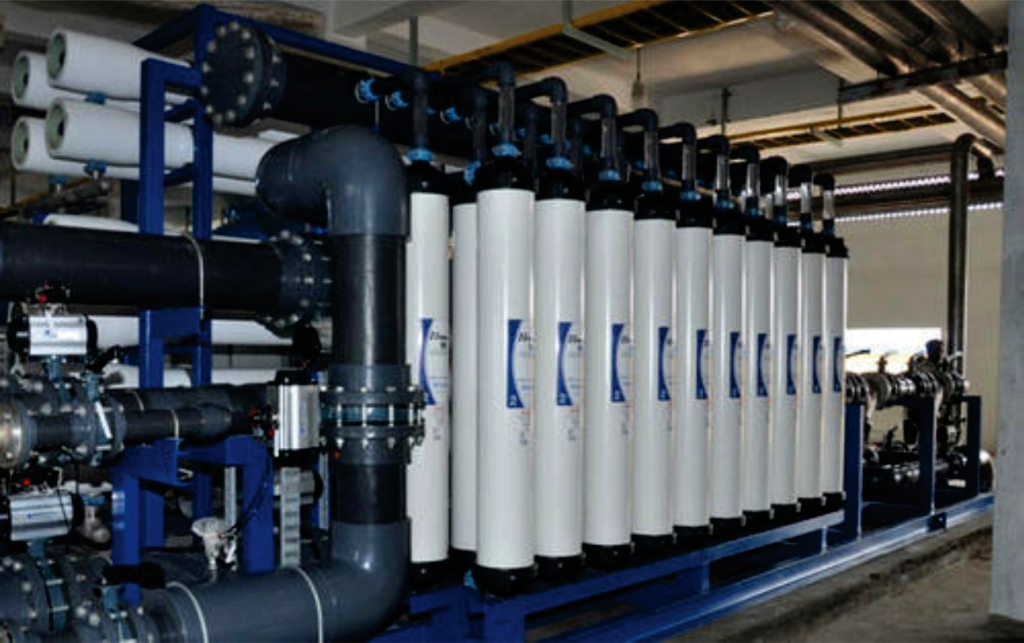
Osmosis is the phenomenon of lower dissolved solids in water passing through a semi-permeable membrane into higher dissolved solids water until a near equilibrium is reached. Reverse Osmosis (RO) is a membrane process of purification which removes most of the total dissolved solids (TDS) in water by reversing the natural process of osmosis. Pressure is applied to a TDS- concentrated solution against a semi-permeable membrane, causing pure water to diffuse through the membrane. RO has become an important process for a wide variety of applications including: medical, laboratory, desalination, industrial waste water, Deionized (Dl) pre-treatment, and drinking water.
A water softener is packed with resin beads. Hard water with calcium and magnesium flows through this resin and, in a process called ion exchange, the hardness ions in the water trade places with soft ions on the resin beads. The result is soft water. Over time, the resin beads in the water softener will become covered with calcium and magnesium ions, diminishing their capacity to soften hard water. Through a process called regeneration, water is automatically flushed through the water softener with a concentrated amount of regenerant. Now the resin beads pick up the soft ions from the regenerant in exchange for the hardness on the beads.


Reverse Osmosis is the most trusted water purifications technology used in purifying water hemodialysis process. We manufacture customized reverse osmosis water systems that produce water following reconnected standards of AAIM, FDA, and ISO. MW Solutions assure you about the quality of water which is further used for renal replacement therapy. Output water meets circulations and standards defined in the European Pharmacopoeia.
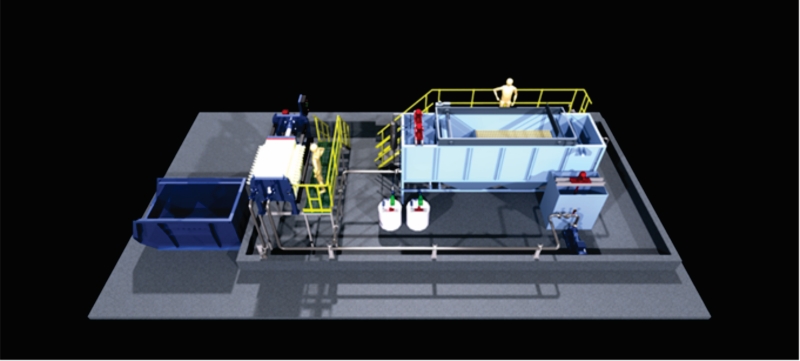
Dissolved Air Flotation system is a kind of commonly used solid-liquid separation equipment in the effluent treatment industry, which can effectively remove the suspended matter, grease, rubber substances in the effluent, and is the main equipment of the effluent preliminary treatment.
Granular activated carbon (GAC) is commonly used for removing organic constituents and residual disinfectants in water supplies. This not only improves taste and minimizes health hazards; it protects other water treatment units such as reverse osmosis membranes and ion exchange resins from possible damage due to oxidation or organic fouling. Activated carbon is a favoured water treatment technique because of its multifunctional nature and the fact that it adds nothing detrimental to the treated water.
Most activated carbons are made from raw materials such as nutshells, wood, coal and petroleum.
Typical surface area for activated carbon is approximately 1,000 square meters per gram (m2/ gm). However, different raw materials produce different types of activated carbon varying in hardness, density, pore and particle sizes, surface areas, extractable, ash and pH. These differences in properties make certain carbons preferable over others in different applications.
The two principal mechanisms by which activated carbon removes contaminants from water are adsorption and catalytic reduction. Organics are removed by adsorption and residual disinfectants are removed by catalytic reduction.
The water passes through the sand from top to bottom. Larger suspended particles will settle in the top layers of sand. Smaller particles of organic sediment left in the sand filter are eaten by microscopic organisms, including bacteria and protozoans, which ‘stick’ to the layers of slime that form around the sand particles. The clean water which passes through the filter is safe to drink. If the grain size is around 0.1 mm in diameter, a sand filter can remove all faecal coliforms (bacteria that originate from faeces) and virtually all viruses.